
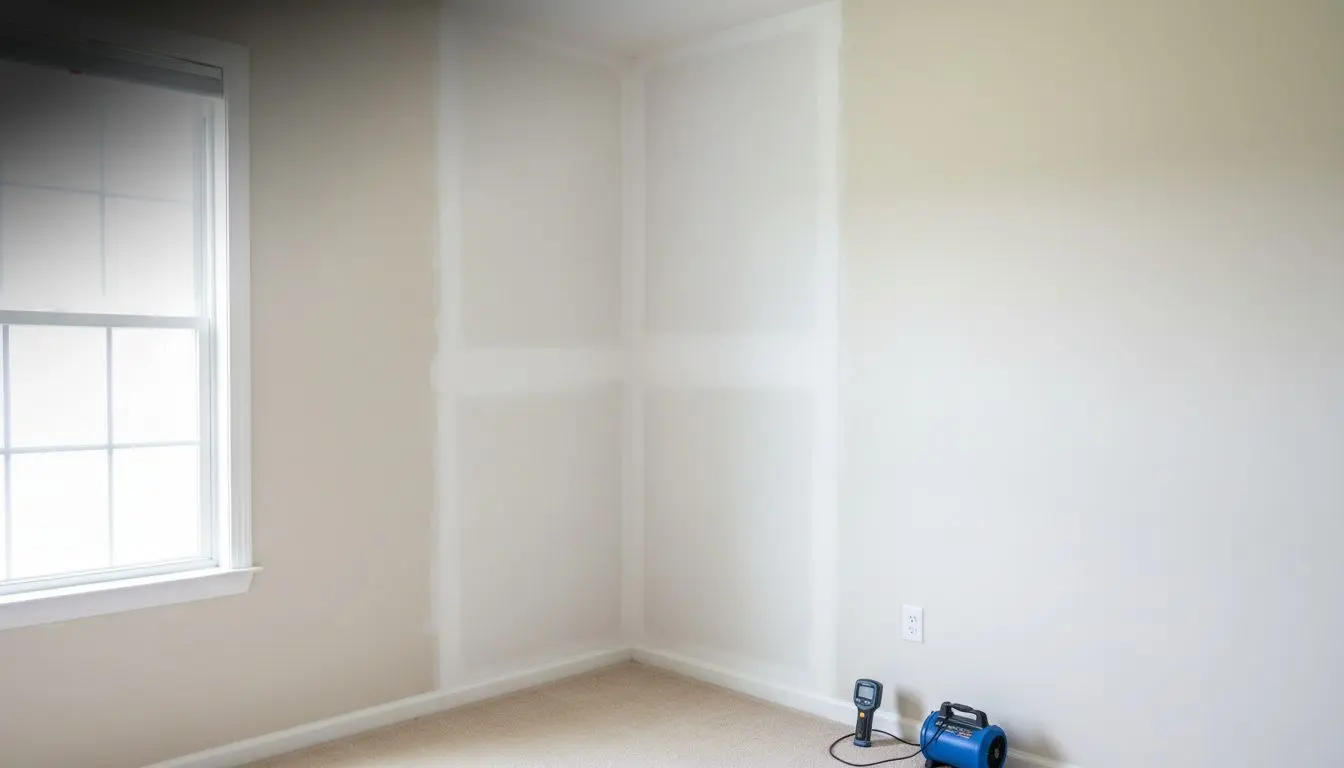
Water Damage Repair in Greenville
Water damaged drywall put back in Greenville
Meter readings taken before anything is cut, wet board and wet insulation out the same day, and nothing closed up until the framing reads dry twice.
Board that has been wet, and what happens next
You end up with the wall back, the framing behind it dry, and dated readings that say so in writing.
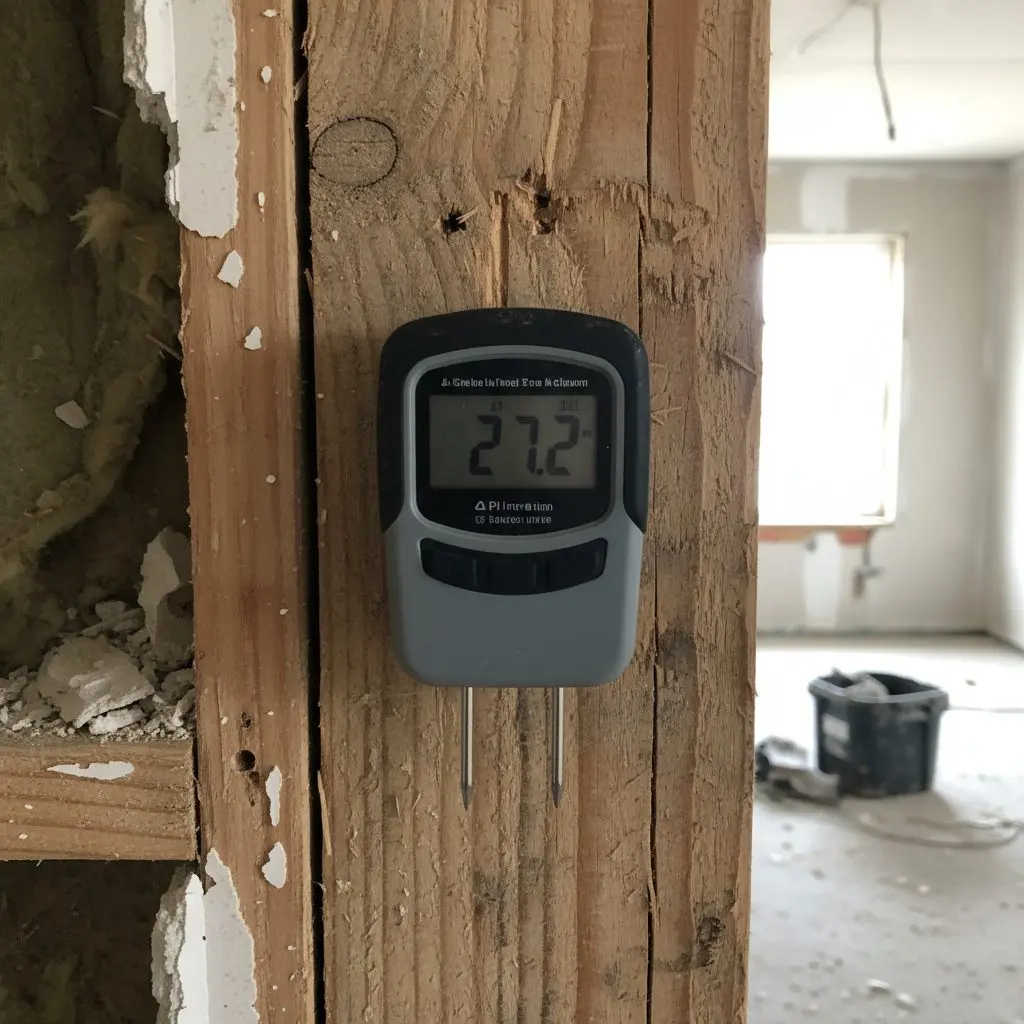
This is board that has been wet. Storm and roof leaks, burst supply lines, failed water heaters, an overflowing bath, and the slow damp rising out of a crawl space into the base of a wall. The job starts with drying rather than cutting. If the board is damaged but never wet, that is drywall repair, and a ceiling that is stained but sound may only need ceilings.
Water work is about fifteen jobs a year here, and they arrive in clusters in the week after a summer storm rather than spread evenly through the year.
Most calls follow a roof or a storm. After that come supply lines that have failed under a kitchen or a bathroom, water heaters that have let go in a hall closet, and base courses stained by damp rising out of a crawl space. Everything wet comes out, insulation included, and nothing new goes on until the framing reads at or under fifteen percent on a pin meter twice, a day apart. That second reading is why a rebuilt wall here does not grow mold on its cavity face through the first humid summer.
Homeowners call the morning after a storm has put water through a bedroom ceiling, and landlords call when a tenant reports a soft wall under a bathroom that has been leaking for months.
Call for a free moisture check at (864) 555-0119. You go from putting a bucket down and hoping it dries out on its own to knowing exactly what is behind the wall!
What a water job covers, from the first reading on
The part of this job that matters happens before any board goes back on, and it is measured rather than judged.
- Meter readings taken and dated on arrival
- Wet board cut back to dry framing
- Wet insulation bagged out, not dried in place
- Air movers and a dehumidifier left running
- Framing read twice before anything closes up
- Mold resistant board where a wall stays damp
- Photographs and readings for your insurer
Drying the wall out or cutting the wet board away
A wall caught in the first day or two often dries where it stands and never has to be opened.
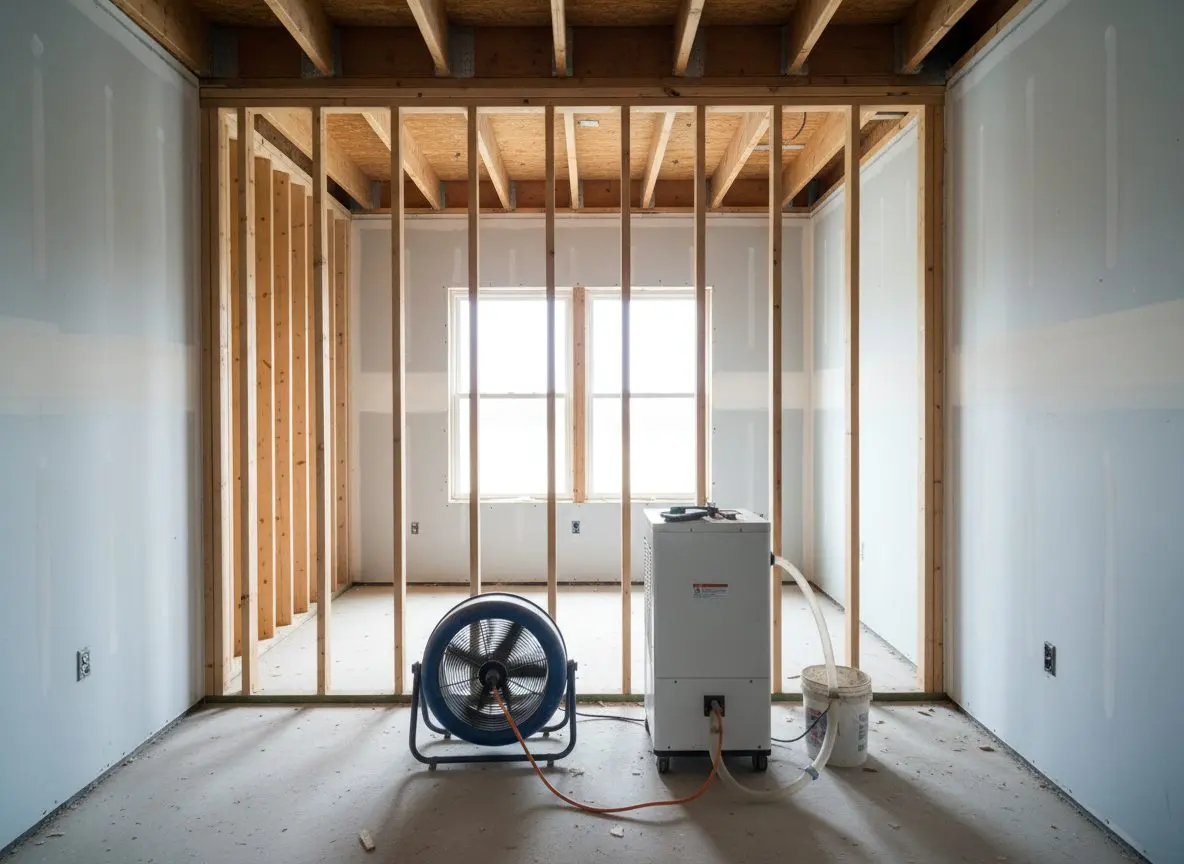
Dry it in place when the water was clean, when it has been in the wall under about forty eight hours, and when the meter falls every day with air movers running. Painted board that has not softened or bowed will give its water back through the face, and what you lose is the paint on that wall rather than the wall.
Cut it out when the board has gone soft or bowed, when the water came off a waste line or in over the ground, or when the readings will not fall after three days of drying. Board that stays wet grows mold on the cavity side where nobody looks, and the first anybody knows is a smell in that room the following July.
We say which on the visit, meter in hand, and we say dry it out where that is the answer even though cutting it out is the bigger invoice. What decides it is a number falling or not falling over three days, which is something you can watch happen rather than a judgement you have to take on trust.
The number a wall has to read before it closes
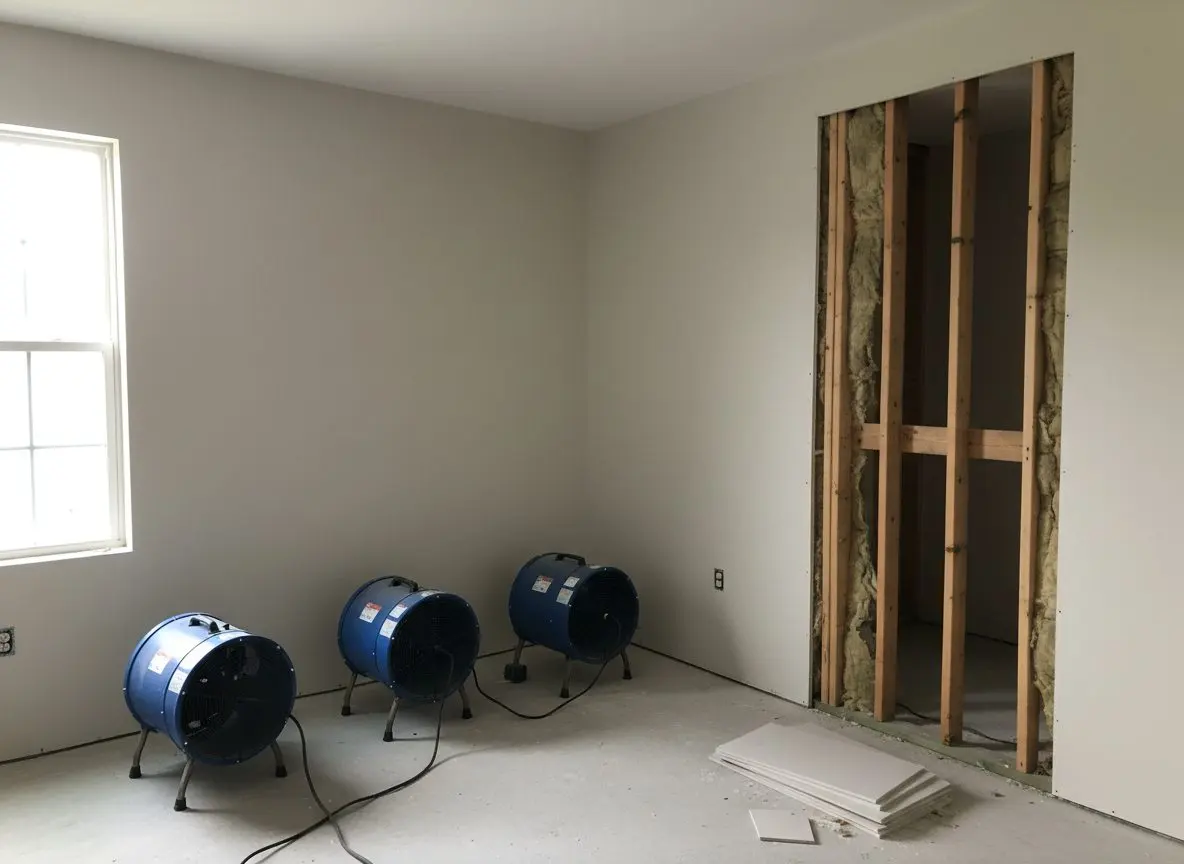
Framing read at or under fifteen percent, twice and a day apart, before any new board goes on.
Nothing gets closed up on a look and a feel. Framing and sheathing are read on a pin meter, and the number has to sit at or under fifteen percent on two readings a day apart before board goes back over it.
Wet insulation comes out and is bagged rather than dried in place, because a fiberglass batt holds water against the face of a stud long after the timber feels dry to a hand.
Board is cut back to the first dry stud past the tide line rather than to the edge of the stain, since paper wicks water further than the discoloration shows. Wet rooms and any wall that stays damp go back in mold resistant board scoring 10 on ASTM D3273, and the cavity is photographed before it is covered.
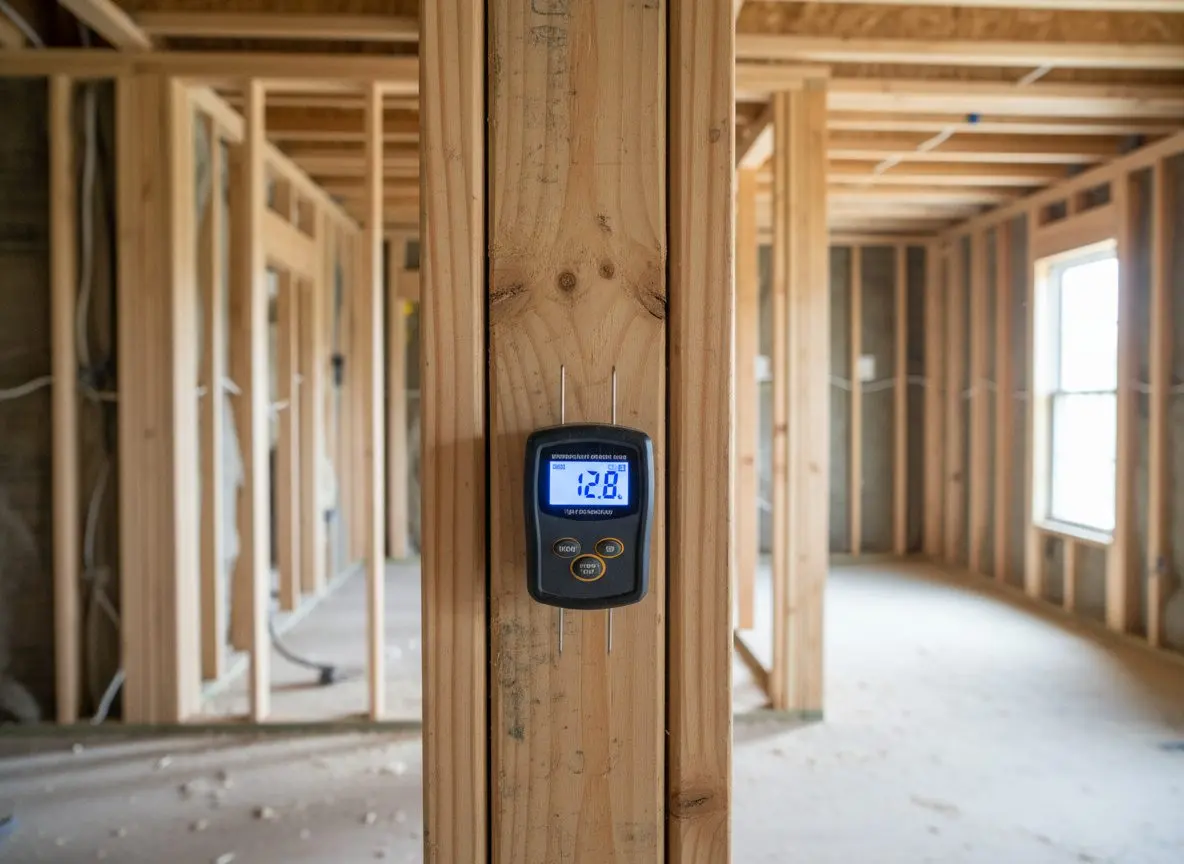
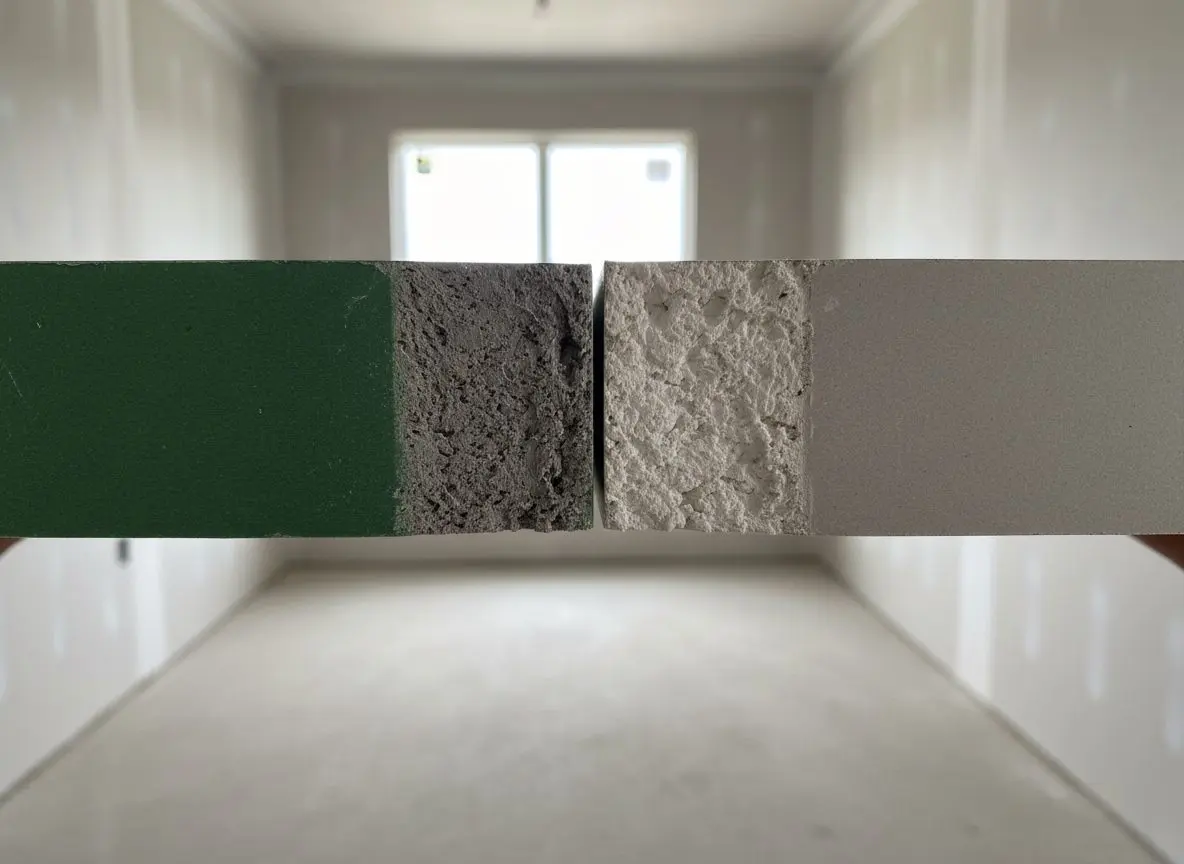
- Pin meter readings, dated and recorded
- Fifteen percent or under before closing up
- Wet insulation bagged, never dried in place
- Cut back to the first dry stud past the stain
- Mold resistant board, 10 on ASTM D3273
- Cavity photographed before it is covered
Ask whoever else quotes what number they dry down to and how they know, then call and we will show you ours.
(864) 555-0119What changes the number on water damage work
Two rooms with the same stain in them can be a week apart. Here the number follows how long it was wet, what the water was, and how much has to come off to reach it.
- How long it was wet
- Water found on the morning is a dried wall and a repaint. Water running behind a shower for a season has taken the insulation, the base plate and often the subfloor, and none of it shows from the room.
- Where the water came from
- A clean supply line is a drying job. Water off a roof brings whatever the attic held, and anything off a waste line means the cavity is stripped and treated rather than dried, a different scope from the start.
- What has to be taken off first
- Wet board hides behind cabinets, tile, trim and flooring, and all of it comes off before the cavity dries. The same leak in a plain painted wall is a fraction of the work, which is why bathrooms quote higher.
- Days of drying equipment
- Air movers and a dehumidifier stay on site until the readings hold, which is three days in April and can be six in August. Every extra day is equipment, power and another visit to read the meters.
- Wet insulation in the cavity
- A wet fiberglass batt is bagged and replaced rather than dried, because it holds water against the stud for weeks. Blown insulation over a ceiling means the whole bay comes down instead of one strip of board.
- Working to an insurance scope
- A claim means photographs, dated readings and a scope written in the format an adjuster expects, and then the time on the phone when a settlement lands short of what is actually behind the wall.
Which of these apply is settled by a meter on the first visit rather than by anybody guessing, and it is written down before anything is cut. Get a free quote
From your first call to a room that is ready for paint
Three to seven days on site for most rooms, and the dusty half of it is done inside the first two.
Tell us which room it is and somebody comes out and measures it, free, and puts the days on paper before you commit to anything.
Get a free quoteWhy the readings matter more than the finish at sale
A dried wall with readings behind it is worth more at sale than a perfect wall with no paperwork.
Nobody publishes a resale figure for water damage repair. The Cost vs Value report from Remodeling magazine prices whole projects, so nothing at this scale appears in it at all, and a percentage return quoted for a dried wall has been made up on the spot.
What holds value here is the file rather than the finish. Dated meter readings, photographs of the cavity before it closed, and a line naming what was fixed above or below the wall are what an insurer accepts and what stops a buyer's inspector asking twice.
Disclosure in South Carolina puts past water damage in front of a seller in writing, so a wall you can explain is an answer and a wall you cannot is a discount.

Tropical rain, saturated air and a wet crawl space
Storms here arrive with tropical rain behind them, a wall is drying into air that is already saturated, and the crawl space keeps feeding the bottom of the room.
- Summer storms bring tropical rain with them
- One afternoon storm here can put more water on a roof than a whole winter week, and the remnants of a tropical system keep it up for two days. Ceilings that hold under ordinary rain give way under that, which is why these calls arrive in clusters.
- The wall dries into air that is already wet
- Opening the windows is what everybody does first, and in August it is the one thing that cannot work, because the outside air holds as much water as the wall. Drying means a closed room and a dehumidifier whose bucket fills, not a fan and a breeze.
- The crawl space keeps feeding the wall
- Damage at the base of a wall here usually comes from underneath rather than from a burst pipe. A torn vapor barrier or a blocked vent leaves a crawl space near saturation all summer, and board put back over that is wet again by the second August.
Wet walls dried and rebuilt after Upstate storms
Six water jobs finished in the last year in houses across the Upstate. Each card names where the water came from, because that is what shaped the work.
-
Ceiling down after a July storm
Taylors
A bedroom ceiling that let go in a night of tropical rain. Four days of drying and two sets of readings before any new board went up over it.
-
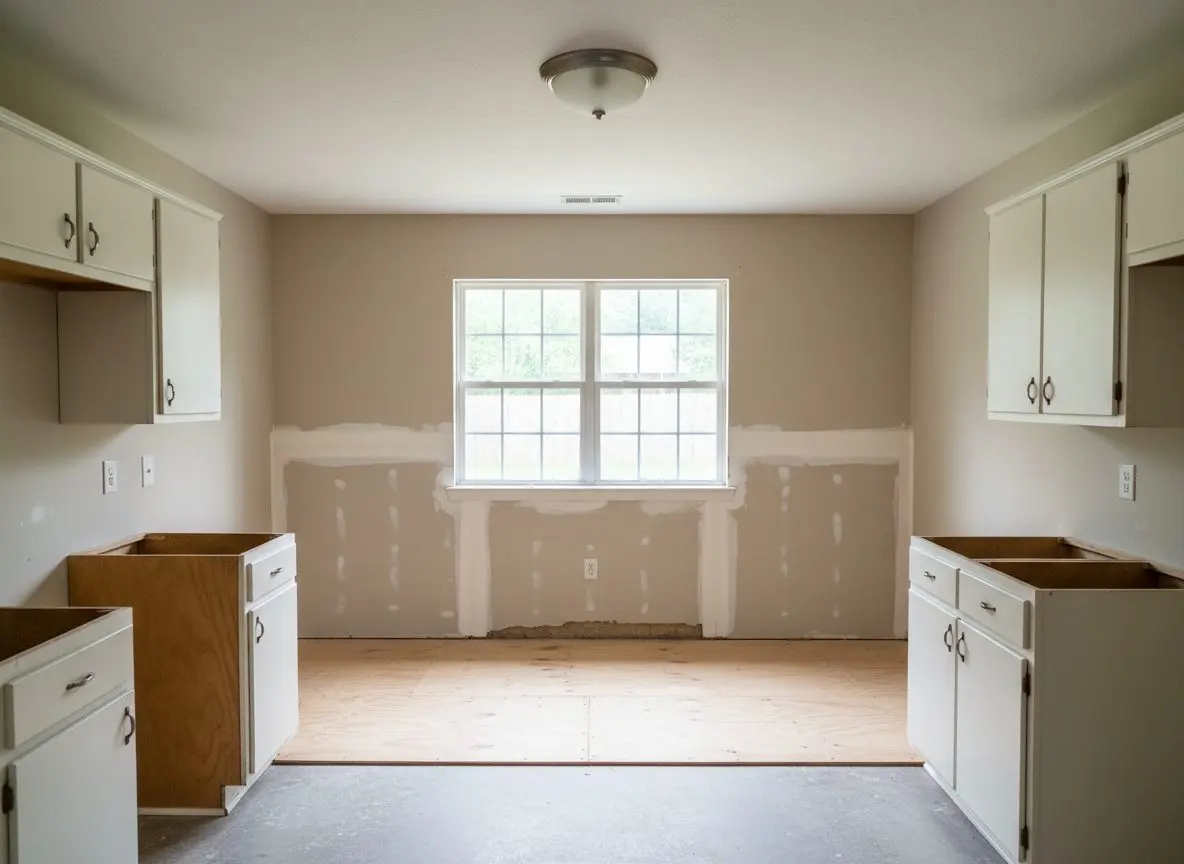
Supply line behind a kitchen
Simpsonville
A weeping compression fitting found by a soft base cabinet. The wall came out two studs either side and the subfloor was dried along with it.
-
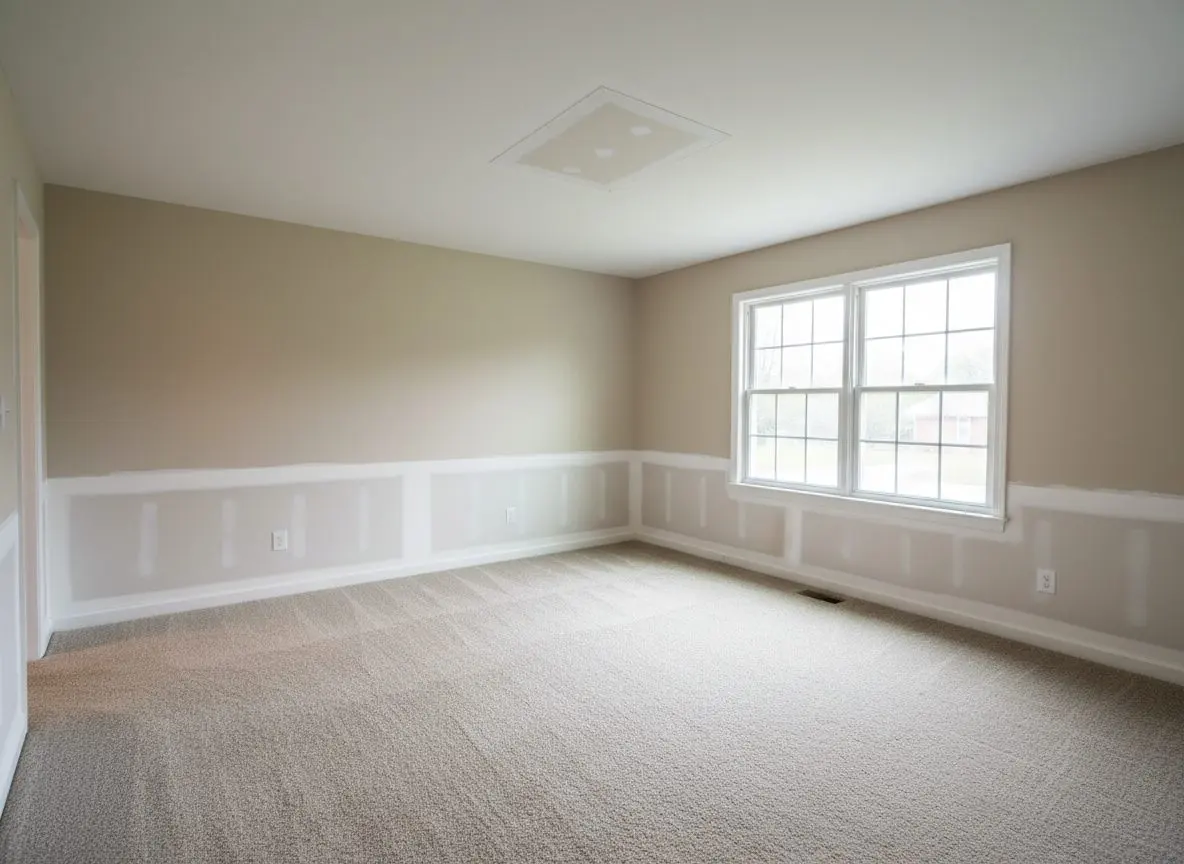
Water heater in a hall closet
Greer
A tank that let go overnight and ran under two rooms. Board out to twenty four inches all round, insulation bagged, and the framing read for three days.
-
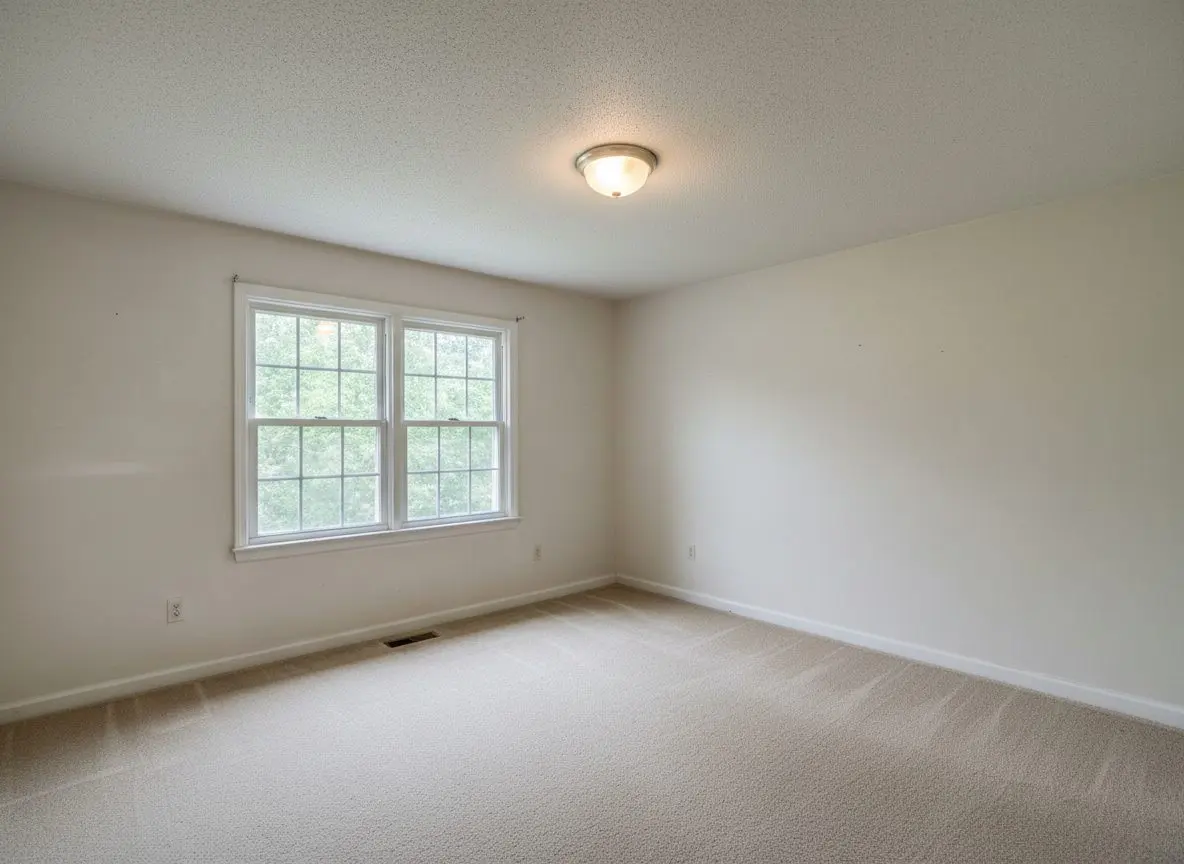
Damp at a base course
Berea
A stained base course in a 1958 ranch traced to a torn vapor barrier. The barrier was put right first, then the board went back in mold resistant.
-
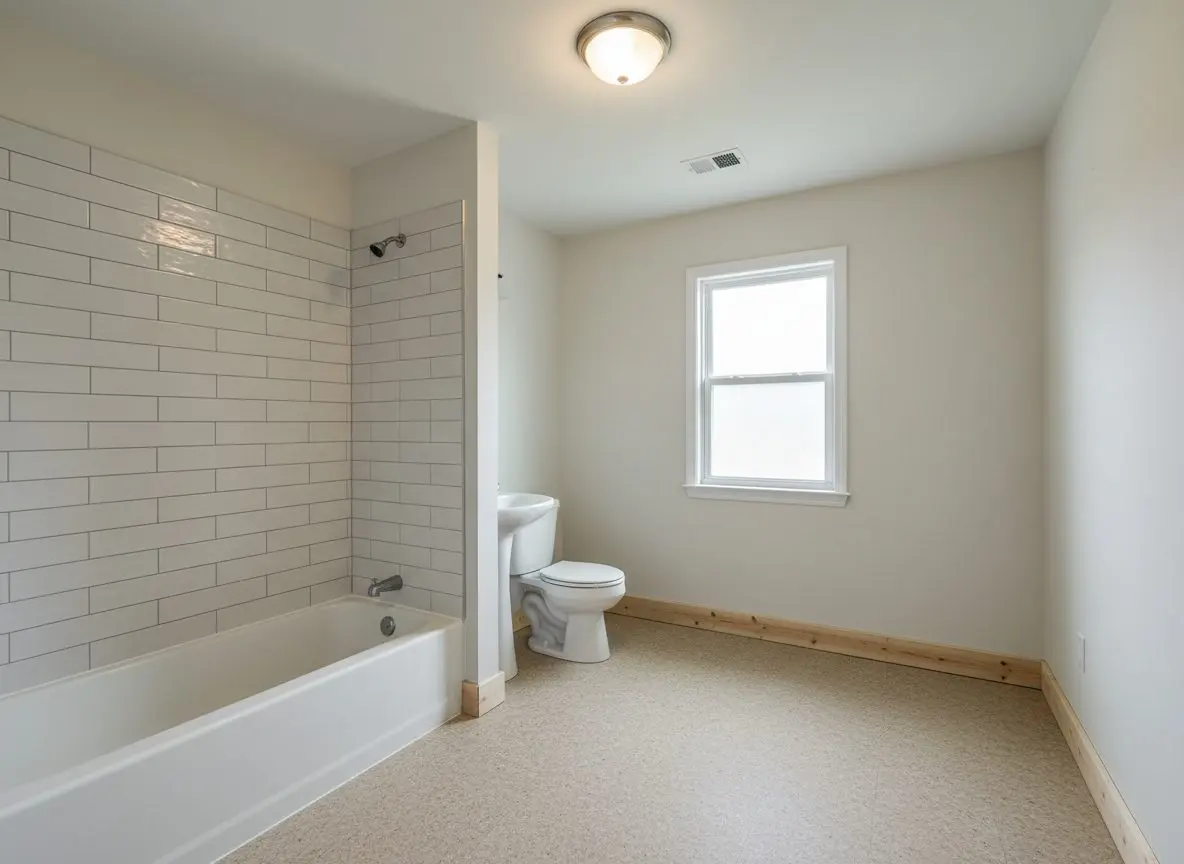
Shower leak found in a rental
Mauldin
A soft wall behind a tub reported by a tenant. Six months of slow leaking had taken the base plate, which was cut out and replaced before hanging.
-
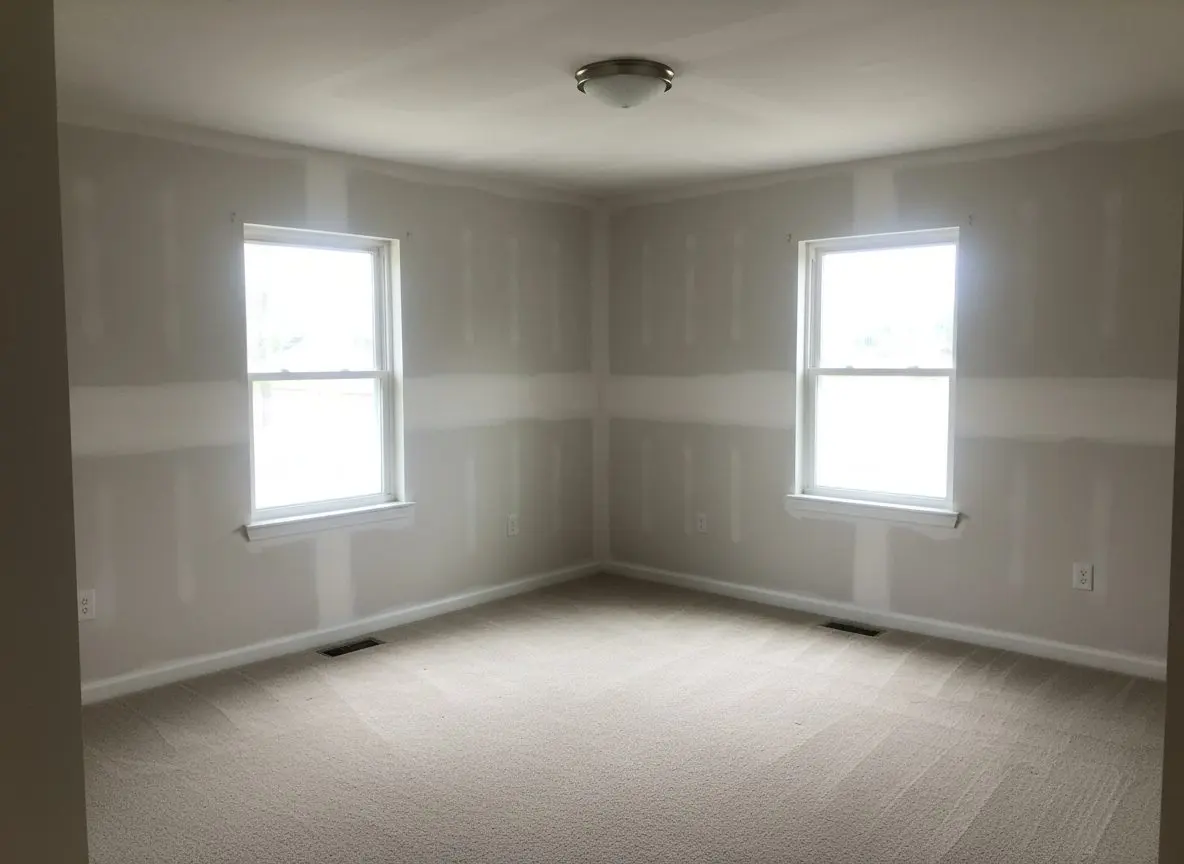
Roof valley leak, two floors
Travelers Rest
Water tracking down a stud bay from a valley to a downstairs ceiling. Both floors were opened, dried together and closed on the same readings.
Customers on the wall that went back dry
-
Rated 5 out of 5
Screw pops all over the upstairs of a 2022 build. They pulled the board back where the framing had moved rather than just filling them. None have come back.
Curtis B. Greer Drywall Repair -
Rated 5 out of 5
Garage into an office, and the boarding was the part I dreaded. August air meant the coats wanted two extra days, and they told me that on day one rather than at the end. It reads like a real room now.
Alicia N. Fountain Inn Drywall Installation -
Rated 5 out of 5
The house is from 1986 and every ceiling had popcorn. My realtor said leave it alone. Wes put a light up there and showed me the ripples underneath, so we did the den first to see. Flat now.
Bonnie H. Mauldin Ceilings
Reviews are easy to write and hard to check, so ask us for a finished job near you and go and look at it.
Get a free quoteFAQs
Frequently asked questions
Questions people ask after water gets into a wall
What should I do in the first hour after finding water?
Turn the water off if it is a pipe, move what you can out of the room, and lift or pull back carpet so the floor underneath can breathe. Do not put a heater on it and do not open the windows in summer. Then call, because the first forty eight hours decide whether the wall can be dried where it stands.
Can you tell how far the water has traveled behind the wall?
Yes, and the stain is almost never the edge of it. A non invasive meter reads through the paint in a grid across the wall and shows where the wet area actually stops, usually higher and wider than it looks. Where it reads high we make one small opening and confirm it with pins in the stud.
How long does the drying part take before you rebuild?
Three days in spring and up to six in high summer, and it ends on a number rather than a date. Equipment runs continuously, the meters are read daily, and the rebuild starts when two readings a day apart both sit at or under fifteen percent. Closing early is what causes the smell people call us about a year later.
Do I have to use the contractor my insurer suggests?
No. You choose who does the work, and an insurer can recommend but cannot require. We will write the scope in the format your adjuster expects and send the readings and photographs with it. If the settlement comes back short of what is actually behind the wall, you will hear that from us in plain words.
Is there mold in there, and would you know?
We can see it and smell it once the cavity is open, and that is honestly the limit of it. What we do not do is test air or issue clearance, because that should come from somebody with no interest in the repair. Where it is beyond a small area on a stud face we stop and give you a remediation firm's name.
Do you do the drying, or do I need a restoration firm?
We do the drying on an ordinary domestic loss, which is most of what comes in. Equipment goes in the same day, and the meters are ours. A whole floor of a house under water, sewage, or anything with a category three loss on the claim is a restoration firm's job and we will say so on the first visit.
Can we sleep in the room with the fans running?
You can be in the house, but not comfortably in that room. Air movers are loud and they run day and night, because stopping them overnight loses most of the day's progress. Most people shut the door on it and move a bed, and the equipment usually only stays three or four nights.
Will the stain come back through the new paint?
Not through what we put on. A water stain on board that is staying in place is sealed with a shellac based stain blocking primer before any paint goes near it, because water stains bleed straight through ordinary latex primer within two weeks. That is a materials choice rather than an extra coat.
What if the leak has not been fixed yet?
Then that comes first, and we will not close a wall over a live leak. We can open up, dry and hold the room while a roofer or a plumber does their part, which is often faster than waiting since the drying has to happen anyway. What we will not do is board over something still running.
Does a whole ceiling come down after a roof leak?
Usually not. Water tracks along the top of the board and drops through at one point, so the wet area is often a couple of bays wide rather than the room. We read the whole ceiling before cutting, and where it has sagged or the joints have swelled it comes out to the nearest joists either side.
Can you work on a rental while a tenant is living there?
Regularly, and the practical part is access rather than the work. We need one point of contact, a way in on agreed days and somewhere the equipment can run without being switched off. Photographs and dated readings go to the owner or the management company as standard on rental work.
What stops the base of the wall getting wet again?
Fixing what is under the floor, which here usually means a torn vapor barrier, a blocked vent or a downspout emptying against the foundation. We look in the crawl space with a light before quoting, and we say when the wall is a symptom. Board put back over an unfixed crawl space is wet again in two summers.
Greenville Drywall Elite
The book runs two to three weeks ahead, so most rooms start inside the month.
Greenville Drywall Elite hangs, tapes, finishes and textures board across Greenville and the mill towns and new subdivisions around it, from crawl-space repairs to whole rooms hung from scratch. Four crews finish a little over two hundred and twenty jobs a year, residential and commercial alike. Trading here since 2013.
Why Greenville homeowners keep calling us back
- Thirteen years hanging houses across the Upstate, trading since 2013
- The measure is free and the quote is itemized, line by line
- Damp is checked at the crawl space first, not guessed at from the stain on the wall
- Coats are timed to Carolina drying days rather than rushed to meet a schedule
- The room is swept and vacuumed before anybody calls the job finished
If a baseboard is stained from the crawl space, a ceiling needs drywall, or a room needs finishing from scratch, call (864) 555-0119 and somebody will come out and measure it for free. The quote is itemized so you can see what each part of the job costs, and the coats are timed to the weather rather than rushed.
Give us a call
office@greenvilledrywallelite.com
Send us a message
141 Traction St, Greenville, SC, 29611
Where to find us